FREE STANDARD SHIPPING ORDERS $250+

AGE VERIFICATION REQUIRED
Are you at least 18 years old?
Are you at least 18 years old?

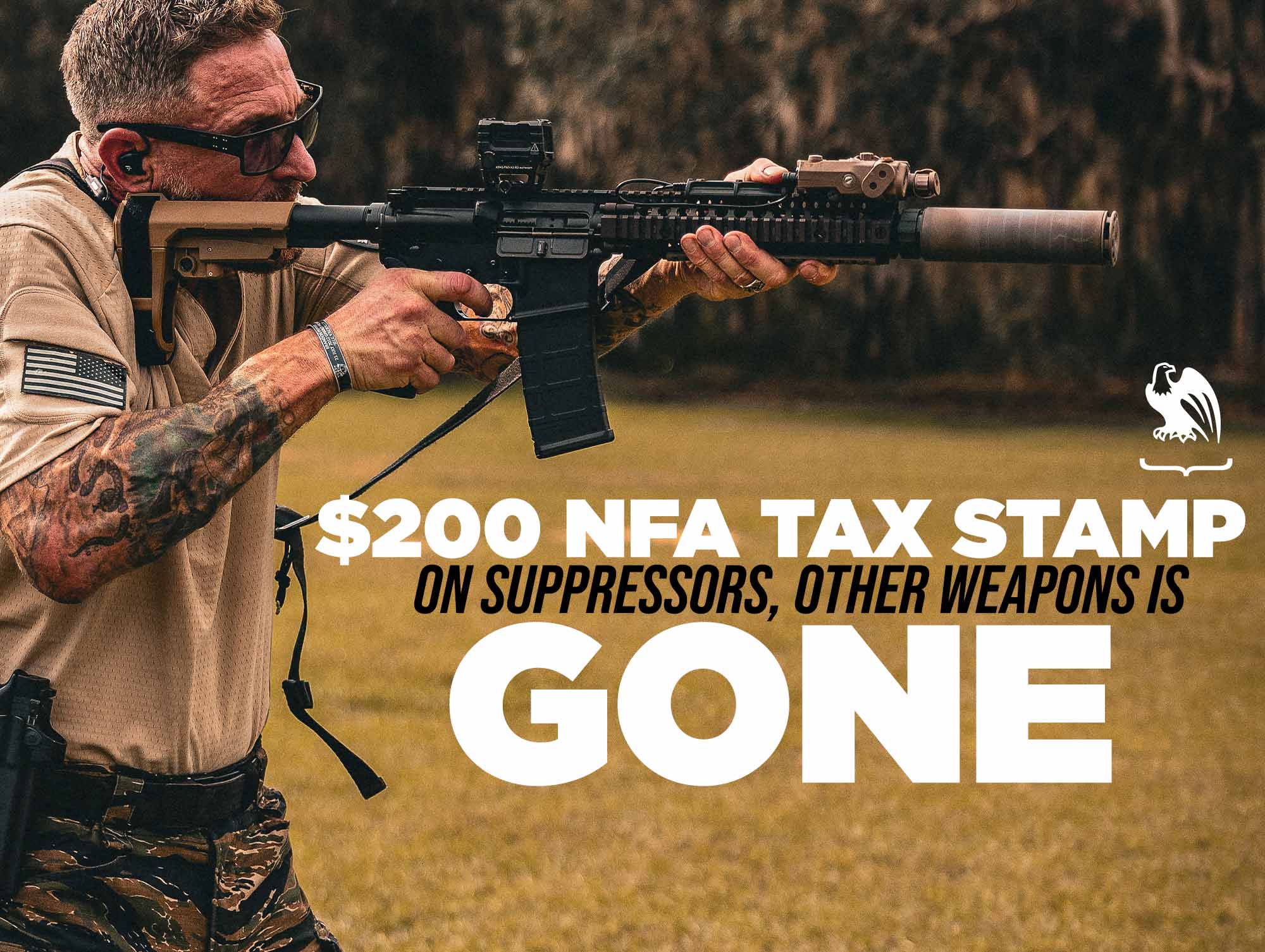
So, what changed, exactly?
As of January 1, 2026, buyers are no longer required to pay the $200 tax stamp imposed on some items regulated by the National Firearms Act (NFA), including suppressors, short-barreled shotguns (SBSs), short-barreled rifles (SBRs), and “any other weapons” (AOWs).
Not only is the change making these devices more affordable for law-abiding gun owners, but it has also led to organizations advocating for fewer restrictions on these items in a push for Second Amendment rights.
In order to fully understand the significance of these changes, it’s important to have a solid background on the NFA, the suppressor tax stamp, and how we got here in the first place.
According to a Congressional Research Service report, the National Firearms Act was established in 1934 to regulate and impose tax rates on the making or transfer of certain firearms. At the time, Congress set a fixed $200 tax stamp on these weapons, which had to be paid by the buyer before they could acquire the item. The act also charges a special occupational tax to most people “engaged in the business of importing, manufacturing, or dealing in NFA weapons.”
But when Congress first introduced the NFA, it was motivated by more than tax revenue. In fact, the $200 tax stamp, which cost about the same as the average machine gun in 1934, was introduced to discourage the purchase of these items altogether in an effort to reduce crime, according to the ATF.
In addition to taxing the sale and manufacturing of these devices, the NFA requires a background check for purchases and maintains a central registry that includes the firearm’s ID, date of registration, and the name and address of the owner.
Essentially, all that changed when the law went into effect on January 1, 2026, is that anyone who goes to purchase a suppressor, SBR, SBS, or AOW can do so without having to pay the $200 tax that was previously required.
Beyond that, the rest of the process is the same. You still have to submit an application to the ATF, pass a background check, and wait to be approved before you can get your hands on these items. All other NFA regulations are also still firmly in place – including the registration of these firearms and the special occupational tax paid by those in the business – as is the $200 tax stamp that applies to machine guns and destructive devices.
The One Big Beautiful Bill’s major advantage to buyers is simply a $200 savings, which is about half the cost of an inexpensive suppressor. It’s a change that goes a long way toward making these devices more accessible for those who want or need them for noise reduction, recoil management, or hunting. It’s also just one less barrier for law-abiding citizens exercising their Second Amendment rights.





Comments